

Of Mastery and Mindset
(A Reaction Paper to Sal Khan’s Let’s Teach Mastery – Not Test Scores)
Sal Khan’s talk about “Let’s Teach Mastery – Not Test Scores” is based on the learning core – mastery and mindset. His introduction is basically about how one learns something, practices repeatedly and proceeds to the next level upon mastery of anything. He pointed out nevertheless, that this is not how our academic model is structured. Until now, our academic structure is based during the industrial period, where the school system is programed for mass production.
Mastery is viewed when learners are able to represent a concept in multiple ways. They are able to communicate it thru language and are able to independently apply the concept to other ways.1
When teachers teach thru mastery, they take time reinforcing a lesson before progressing to a more difficult area of the subject matter. There is always a more in-depth explanation of the topics. Content is taught making use of quality-assured resources which can be made available to many learners.
My son was recently diagnosed with Asperger’s Syndrome Disorder (from here on will be referred to as ASD), and it opened new perspectives for me with regard to teaching mastery and not focusing on test scores. I was raised in a society where test scores matters, but now I have to raise my son in a way where he has to unlearn everything I know about society, mastery and test scores.
ASD is actually a developmental disorder which is characterized by a significant difficulty in social interaction and non-verbal communication, partnered with restricted or repetitive behavioral pattern or interests.2
Sal Khan’s bold suggestion that is being directed to educators is trying to do away with the cycle of a state-mandated academic standard that needs to be met within a number of subjects and are testing quantified.
A student with ASD does not understand why he needs to demonstrate a certain skill set in class. They are not able to pick up on certain social cues and are unable to read the body language of others.3
Our current education system focuses on practicing skill sets in the classroom and also at home (in the form of homework) then moving on to another skill set which required knowledge of the previous skills learned. But someone with ASD dislikesany changed in their routines and would appear to lack empathy. They are also unable to recognize someone’s subtle difference in speech tone, pitch, and accent that may alter someone’s speech meaning. It would be hard for them to understand jokes or sarcasm and would take everything literally.
A recent lesson I started teaching my son is “mindfulness of others”. What is it you ask? It is the golden rule, whatever religion you have. (Refer to Image below)

Sal Khan mentioned that in a traditional academic model structure, which is the type of academic model that most of us grew up in, students are grouped together by age, and or perceived ability, and is shepherd all together at the same pace. And what usually happens, the teacher will give a lecture on any subject, students go home, and then do some homework. The next morning, homework is reviewed, and then another lecture, more homework and it goes on and on and on. This will continue for about a month or two, and then we get a summative test or the likes. The test scores are recorded knowledge gaps which are not identified and let’s say 25 percent of the knowledge gap is not addressed, it is left at that.
This is the same academic model structure my son has. This has been used by my grandparents, my parents and me. Fast forward to 2018, my son with ASD is using the same structure. And I see his potential is not developed. It is either stagnating or worst, deteriorating.
I live my life on the pretense that I know nothing. So every day, I learn something new. I learn about myself, my family, the society and may even be the world, the universe or beyond. Imagine the knowledge gap that I have. It is too wide to even fathom and too deep to comprehend. So what do I do to even remotely catch up with life? I go back to the basics.
This is what I teach my son. I am 38 years old, still going back to the basics and at the same time, teaching my 9-year-oldson with ASD something that I myself have just learned.
For Khan our current system is ludicrous. He even asked us to imagine building a house in such a manner. The builder would say to the contractor, “we only have 80% of the foundation laid down” and the contractor then responds “that’s okay, here’s a C grade and we’ll just build on top of this incomplete foundation.” Why would we assemble someone’s education this way when we would never assemble a house this way?
Mastery is defined as the idea of learning incrementally one skill after another until a student can be developed through topic comprehension before moving forward. 4 This mastery approach is presented by repetitive topics and an in-depth knowledge is added while linking additional concepts.

As a parent, I adhere to a student mastery checklist which includes:
- · Observations
- · Informal Conversations
- · (and) Projects.
Skeptics believe that a mastery-based learning is impractical. It would mean that each lesson would have to be personalized to keep students in their own learning track. It was “logistically difficult” and would demand too much from each teacher to be able to give a different worksheet to each student.
But in this day and age, it is no longer impracticality. Tools are readily available and can be acquired easily at their own time and pace. There are even exercises and activities catered to a student’s learning style.
If an impractical point of view before is realized now, students would be able to master concepts. Their mindset is changed as our perceptions changes. Sal Khan emphasized character building through perseverance and responsibility. Instead of focusing on the lecture, students have more interaction time which develops a more positive social behavior, which is what needs to be developed by someone with ASD. It helps in material mastery and simulation-baseddialogue.
A non-mastery framework modeled for industrialization is what our current educational system has. Students are pushed to learn along with the majority whether they have knowledge gaps or not. And if these knowledge gaps increased, there would also be a longer learning time needed for a student to cope with the learning demands.
Sal Khan mentioned that we are now exiting the industrial age and we are headed towards information revolution. The massive workforce needed during the industrial age is now being replaced by computers with specialization in information processing. The traditional academic model structure is geared towards a non-mastery framework model used during the industrial age. But with technology, specialization is replacing the massive workforce; and with specialization, mastery is imminent and a necessity.
For the traditional educators, they see my son as different. Different in the sense that he is unlike any student they have before. He is then singled out and his behavior is seen mostly as misbehaving without understanding why.
But if the educator teaches mastery instead of focusing on test scores, you would certainly notice that differentiation is out. Gone are the days where people look for the differences of everybody. Now is the time to change perspectives. We need to stop looking on the outside and start looking within. If you feel the need to compare yourself with others, stop. Instead, compare yourself to the person you were before.
Mastery allows teachers to challenge their students. Challenge what these learners deemed different about them, to bring out the oneness within. We don’t want to push these children to get high marks, we want them to learn. And hopefully, make a difference in their lives.
Now, what is a mindset? It is a collection of thoughts and belief shaping our every thought habit. How we think, feel and what we do is affected by it. It impacts how we make sense of the world and how we make sense of ourselves.5
Sal Khan’s talk mentioned how others were able to reinforce their mindset about learning. Mindset is said to be able to fulfill our potential. Looking at two kinds of mindset, we have:
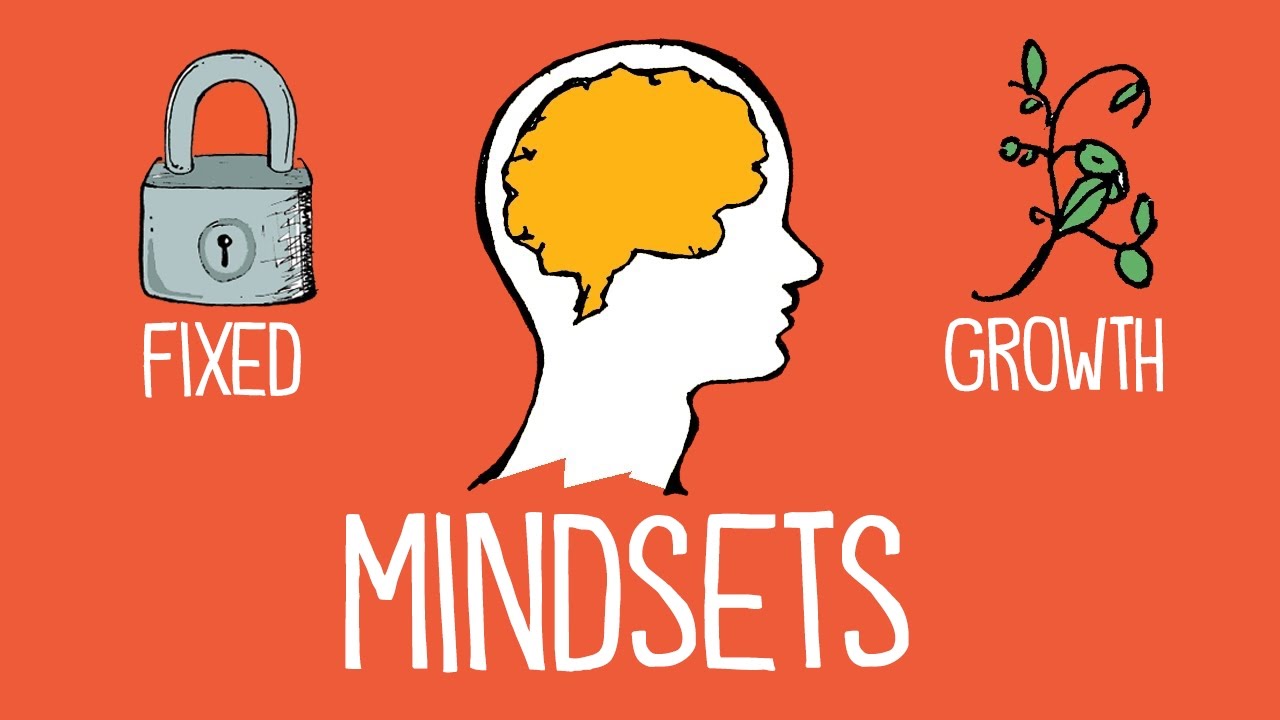
- “In a fixed mindset, people believe their basic qualities, like their intelligence or talent, are simply fixed traits. They spend their time documenting their intelligence or talent instead of developing them. They also believe that talent alone creates success—without effort. They’re wrong.”
- “In a growth mindset, people believe that their most basic abilities can be developed through dedication and hard work—brains and talent are just the starting point. This view creates a love of learning and a resilience that is essential for great accomplishment. Virtually all great people have had these qualities.”
Mindset basically unleashes ones potential.
Sal Khan also talked about how students who master a concept, also build their growth mindset. They progress towards the betterment of themselves. Instead of focusing on lectures, the student would be able to interact with each other; going deeper into the mastery of a material and go into dialogues or simulations.
The growth mindset develops with the idea that intelligence is not set in stone. Advantages with a growth mindset include better coping mechanism with transitions and higher self-regulation. Another is a much better pro-social behavior.6
With this information, teaching mastery is very appealing for a mom like me. This could probably help my son’s grit and perhaps be less aggressive, which may boost his self-esteem and steering clear away from depression and anxiety.
Teaching mastery instead of test scores gives students a template in which to follow. It would allow them the tool necessary to face any setback they might have in life. Mastery is basically about the growth mindset, and of course the growth mindset is all about effort. Shaping students’ behaviors and mindsets would develop an individual to their highest potential.
References:
1. Evans, S. (2017, March 24). Teaching for mastery: What is mastery? Retrieved March 9, 2018, from https://www.tes.com/teaching-resources/blog/teaching-mastery-what-mastery
2. Asperger syndrome. (n.d.). Retrieved March 2, 2018, from https://en.wikipedia.org/wiki/Asperger_syndrome
3. Asperger’s Syndrome – Symptoms. (n.d.) Retrieved March 08, 2018, from https://www.webmd.com/brain/autism/tc/aspergers-syndrome-symptoms#1
4. Altland, %. (2015, March 10). Student Mastery Guide. Retrieved March 2, 2018, from https://demmelearning.com/learning-blog/student-mastery-how-will-i-know-when-they-get-it/?utm_source=Demme%20Learning&utm_medium=DLB&utm_campaign=Student%20Mastery%3A%20How%20Will%20I%20Know%20When%20They%20Get%20It%3F&utm_content=The%20Case%20for%20Teaching%20for%20Mastery
5. Jd. “What Is Mindset?” Sources of Insight, 19 July 2014, Retrieved March 9, 2018 from sourcesofinsight.com/what-is-mindset/.
6. Busch, Bradley. “Research Every Teacher Should Know: Growth Mindset.” The Guardian, Guardian News and Media, 4 Jan. 2018, Retrieved March 08, 2018 from https://www.theguardian.com/teacher-network/2018/jan/04/research-every-teacher-should-know-growth-mindset.
 Zanyfem Online Services
Leave a comment