
“The Importance of Understanding Animal Communication”
(A Reaction Paper)
With the rise in technology, humans are hooked in finding answers outside the planet. They are curious and seek life forms other than what is found here on Earth. Encounters with the third kind seemed to be a trend nowadays. They have forgotten that humans may dominate in terms of power, but not in numbers. There are as many as 8.7 million other life forms on Earth (Goldenberg, 2011). The ability of humans to be able to think about abstract thought forms and concepts and then being able to communicate them with other human beings through language is incredible. Animals, on the other hand, do not gather around tea or coffee time and discuss politics or art and poetry. There is no known evidence that indicates that they even talk about how their day has been, or how the weather today would affect their chances of getting a good meal that night.
Which is why one might wonder how, amidst the seemingly chaotic world we live in, can communication be established? What is it for? Communication is defined as transference of information among individuals. Most often than not, there is a sender, receiver and a channel to transfer these symbols, signs and even behavior (Merriam-Webster, n.d.). You might ask why our species needs communication. It is for organisms to interact with the most basic life function — survival.
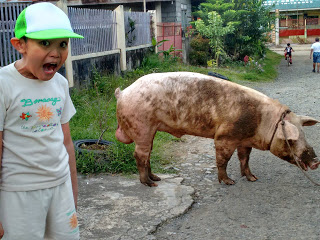
Most animals have an elaborate communication behavior especially towards how they obtain mates or how they compete with other potential partners. They also communicate to establish dominance and or defend their territory which is most important in their social hierarchy and in defending their territory. Communication is the key in coordinating group activities, food acquisition and how they defend and maintain any cohesion in a group. Communication is also used for caring for their young. It is also used by the species in providing parental care to their offspring and coordinate behaviors to ensure survival among offspring.
In the assigned reading Animal Communication by Thomas A. Sebeck, it is shown that animals are capable of passing information between members of a species and even between different species. The information passed between animals causing changes or responses in the receiving animal (Animal Communication, n.d.). These animals communicate with the use of signals through visual, auditory, tactile or chemical based.
Visual communication is the involvement which can be seen. These include gestures, facial expressions, and body postures. Visual signs are widely used by animals and are commonly used during mating rituals. Facial expressions would convey information between species signaling dominance and submission. Color changes are also visual signs showing readiness in mating and finding a partner for reproduction and or as a danger sign for predators.
Auditory communication is another form of communication widely used in the animal kingdom. Non-bird species uses this form of communication but it is important more especially to birds that use sound to convey warnings or to attract mates and coordinate within their species to defend territories.
Tactile signals are limited as compared to other communication signal. The sender and receiver must be right next to each other for touch communication to occur. It is most common in insects. It plays an important role in their social relationships.
Chemical based signaling is where pheromone is released to signal another individual. It is often used to attract potential partner, or trigger another individual in case of danger or just to leave a trail for off-springs. And in some cases, signals can even be electric!
The assigned reading, Animal Communication by Thomas A. Sebeck, talked about zoosemiotics and how it can be decomposed. It also dealt with the overlapping fields of investigation such as zoopragmatics, zoosemantics and zoosyntactics.
Zoosemiotics is defined by the author as a science involving the coding of information and how it is processed together with the imposition of the consequences of the functions of how the living animals communicate. It is decomposed into six aspects as (i) the source which is the origin of the information; (ii) the destination would then be the receiving end of the information. Third aspect is (iii) the channel or how the information is transmitted through the process of encoding and decoding. There is also the fourth aspect which is (iv) the code. It is where messages are converted from the source to the destination. Another aspect is (v) the message which is usually the signal, symbol or behavior from the source and then received as (vi)a context by the destination of the message.
These six factors may take place at one time in communication but can be distinguished into three overlapping fields of investigation. Zoopragmatics deals with how the source or message is encoded, how the destination or receiver decodes the message and how it is transmitted through the channel. These animals make use of sensors to distinguish the dispersed message through the air, by light or by touch. It is transferred through pheromones or through a pulse frequency or vibration. It is still unknown how these animals take advantage of these signals but can be compared to how humans use speech. The animals’ sensors are also able to distinguish a variety of shapes and colors depending on the intensity of the release by the source. It is easily distinguishable through sight and can be turned on or off in an instant. This signaling behavior is classified into three categories: “intention” movements which seemingly shows planning; “displacement” movement may seem irrelevant at first glance but is adapted and intensified as “ritualization”.
Other than visual sensors, animals are also capable of receiving auditory messages through rhythmic density changes which in turn forms an acoustical system. Both visual and auditory senses, may it be through chemical or electrical communication, are perceived through changes in space and time which results to a much faster reaction time by the receiver or a certain set of organism depending on their group hierarchy. The behavior coordinated within the group is decreased in distance when postures, gestures and facial expressions are used; while touch would replace the visual sub-code when distance is much closer.
Zoosemantics is a derivative of an enormous complex structure of psychology and animal social organization but is very much limited because of habitat inaccessibility or a lack of adequate theory to cope with animal communication data.
Zoosyntactics on the other hand, deals with signaling combination without purpose or significance to any occurrence in the behavior of the code and or the message.
Zoosemiotics as a whole is pure when it deals with an elaborate theoretical model of the development of language dealing with an animals’ signaling behavior. It can be descriptive when it is in understanding of natural animal communication and behavior. Or it can be applied zoosemiotics when it deals with the exploitation of animal communication system for man’s benefit.
Sebeck’s basic assumption is that “all animals are social beings, each species with a characteristic set communication problems to solve.” They are able to express messages just like human beings. They feel threatened if the situation calls for it. And when external or internal stimulus is applied, they can feel pain or hunger just like human beings, which is considered as the most intelligent animal life-form. This is why the process of basic zoosemiotic can be of practical use to work hand in hand with how humans handle information. It provides the scientist with a setting to search for simpler solutions for the complex communication behavior of man.
Both humans and animals showed usage of communication but humans have a unique open vocal system and makes use of complex symbols as opposed to their primate counterparts or even as shown by most animal life form (Boundless, 2016). But what can humans benefit from understanding animal communication? It can be put to practical use for existing human information to be supplemented. It can also disclose biological and anthropological origins of human communication as stated in Sebeck’s article.
Understanding of animal communication can provide scientists with pattern formation or a framework that could benefit humans to further study man’s communicative behavior. As an example, scientist can study why animals are able to display patterns of aggressiveness or instinctual changes in direction that can be informative to better understand human behavior.
Communication is a process critical for both animals and humans for information to be transformed, created or acquired for carrying out life activities. It has many forms and functions but even with the diversity, there is still a lot in common with regard to the basic communication dynamics including the function it could serve any living organism.
Animal communication studies can help in furthering the understanding of human behavior and its communication role with human affairs in general. It is a source of reflection and a reminder of the common behavior and activities amongst humans and animals. It highlights complex human communication with the use of symbols which is fundamental to human communication and existence.
Language is what separates humans and animals. It is very hard to imagine a life without language. But of course, in the course reading, it shows that animals can communicate too. But what are the similarities and differences between the two? The main difference is depth. Human communication can be creative and very expressive but animal communication is limited because of the number of varieties they can create. Every symbol in animal communication has only one meaning, while humans can have several for every word or sign. Animal communication is also dependent on their biological structures and it is never symbolic. Animals communicate depending on their biology, while humans acquire language thru culture or the environment.
For many animals, their communication is context driven and almost always never interchangeable. Whilst the humans, are able to talk about abstract or imaginary ideas and human communication is genderless. While animals need to evolve for their signaling to change, humans can easily invent new words.
Animals are indeed social beings but their communication is limited depending on how they send or receive the messages. Humans can string an infinite way to form words and create meaning, which probably brought about the urge to know and learn more. Animals are social beings but as Aristotle once said, “Man is by nature a social animal; an individual who is unsocial naturally and not accidentally is either beneath our notice or more than human. Society is something that precedes the individual. Anyone who either cannot lead the common life or is so self-sufficient as not to need to, and therefore does not partake of society, is either a beast or a god.”
So which one are you?
References:
• Goldenberg, S. (2011). Planet Earth is home to 8.7 million species, scientists estimate. Retrieved from https://www.theguardian.com/environment/2011/aug/23/species-earth-estimate-scientists
• “Communication.” Merriam-Webster. Merriam-Webster, n.d. Web. Retrieved from https://www.merriam-webster.com/dictionary/communication .
• Khan Academy. “Animal Communication.” Khan Academy, (n.d.). Retrieved from https://www.khanacademy.org/science/biology/behavioral-biology/animal-behavior/a/animal-communication
• Boundless. “Human vs. Animal Language.” Boundless Psychology Boundless, 27 May. 2016. Retrieved from https://www.boundless.com/psychology/textbooks/boundless-psychology-textbook/language-10/human-language-408/human-vs-animal-language-236-12771/
 Zanyfem Online Services
Leave a comment